
May 09, 2011
Like father like son: from de Lartigue to you, a lineage of street stylers
Like father, like son: From Lartigue to you, a lineage of streetstylers
"Go see the Lartigue exhibition at Caixa Forum, you'll love it and the texts are totally inspiring for the winter collection catalog". With this brief message, Patricia, the artistic director of the winter catalog (yes, we already have the winter catalog done, unbelievable), recommended that I go to the exhibition of Jacques Henri Lartigue; a 20th-century photographer born into a wealthy family who used photography as a way to hold on at all costs to what obsessed him: happiness and youth, the fleetingness of happy days and the passage of time.
"Go and watch Lartigue exposition in Caixa Forum you'll love it, and his quotes are a great inspiration for the Winter Collection". With that short message, the Art Director of the Winter Catalogue (Patricia is her name and yes! We already have the winter catalog, can't believe it) encouraged me to check out Jacques Henri Lartigue's work. He is a photographer from the 20th century, member of a wealthy family whose motto was to retain, no matter what, his greatest obsession: Happiness and Youth, the fortunate fleeting days and the pass of time.


As Patricia well foresaw, I loved Lartigue; in the exhibition he is described as someone who seemed to possess a special aptitude for happiness and for enjoying life with a carefree elegance. His photos reflect happiness, beauty, sense of humor, speed, audacity in his framing, graphic culture in his compositions; he was not an aristocrat (like me) but that carefree way of life is noticeable not only in the protagonists of the photos but also in the succession of locations: Hendaye, Biarritz, Delage, Marseille, Paris...
As Patricia anticipated, I was enchanted by Lartigue. In the exposition he was described as someone who seemed to possess a special skill for happiness and for enjoying life with nonchalant elegance. His photographs are the reflection of joy, beauty, sense of humor, quickness, audacity in his framework, and graphic knowledge in his artistic compositions. He was not an aristocrat (like me), but he certainly was perceived that way; not only because the characters in his pictures, but because his unconcerned life style, and for the succession of locations he chose such as Hendaya, Biarritz, Delage, Marseille, Paris...
As Patricia anticipated, I was enchanted by Lartigue. In the exposition he was described as someone who seemed to possess a special skill for happiness and for enjoying life with nonchalant elegance. His photographs are the reflection of joy, beauty, sense of humor, quickness, audacity in his framework, and graphic knowledge in his artistic compositions. He was not an aristocrat (like me), but he certainly was perceived that way; not only because the characters in his pictures, but because his unconcerned life style, and for the succession of locations he chose such as Hendaya, Biarritz, Delage, Marseille, Paris...


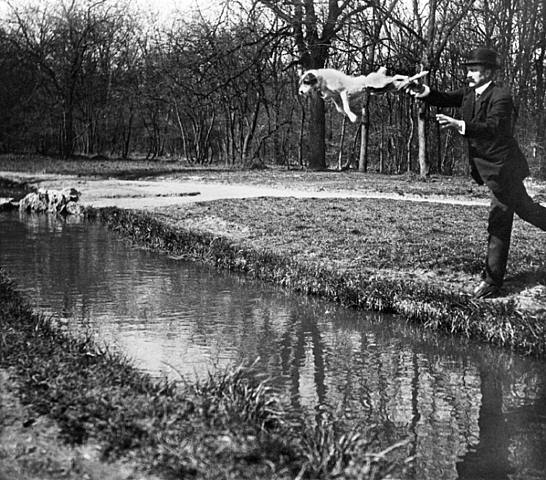
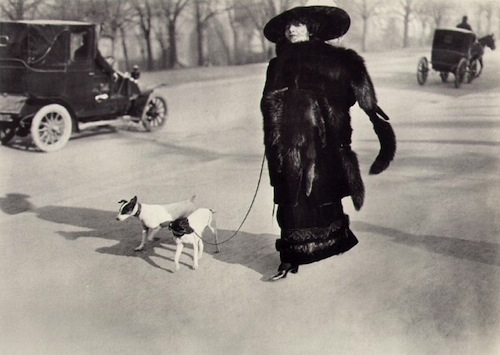
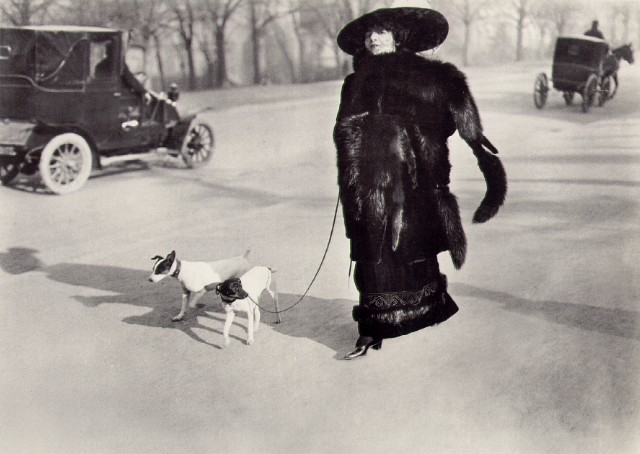
Paris. It was in Paris that Lartigue first took his camera out onto the street and began photographing ladies strolling through the Bois de Boulogne whose attire particularly caught his attention. Since he didn't know them at all, he was forced to take a quick, spontaneous, almost stolen photo, thus these photos constitute an extraordinary document to understand the lifestyle of an entire generation. Perhaps this phenomenon sounds familiar to you, as we are immersed in it; Lartigue is known as the father of what we now consider to be modern streetstyle, although given the time and the heirs he has had, I would rather consider him the grandfather.
Paris...That was the place where Lartigue took his camera out on the street for the first time, starting to photograph ladies walking down Bois de Bologne with outfits that impressed him in a particular way. The photographs were so uneducated, forced to be taken so quickly, spontaneously, almost stolen...but eventually those pictures became an extraordinary documentary of a lifestyle for an entire generation. Maybe this phenomenon is very familiar to you, we are immerse in it; Lartigue is known as the father of the modernly called streetstyle; however, given the time that have passed and the successors that followed him, I prefer to call him the grandfather of streetstyle.

And if Lartigue is the grandfather, Bill Cunningham is undoubtedly the father. This good man has been roaming the streets of NY for over 50 years photographing people for his column in the NY Times "On the street" where he recounts the atmosphere that week on the streets and its reflection on people's attire.
So, if Lartigue is the grandfather, Bill Cunningham is the father of the whole thing, no doubt. This good fellow has walked the streets of New York taking pictures of people for his column in the "NY Times "On the street" for 50 years; with his work, he tells us the environment (or surroundings) that the city has lived last week on the streets and its reflection on people's outfit choice.

He considers himself a "bad photographer" but says his success lies in the almost anthropological curiosity he feels. Little is really known about him: he always wears a blue shirt or down jacket, has a husky voice, and bikes everywhere, but it seems that many of the mysteries surrounding his life will be revealed in a film made about him, the trailer for which you can see here.
Following the line of succession, we come to someone who often mentions Bill in his blog; it could be no other way, it's Scott Schuman, the heir to this whole legacy of street portrait artists who has undoubtedly managed to launch the streetstyle phenomenon into the stratosphere, or rather, into the blogosphere. The Sartorialist is returning to Spain these days to participate in a digital meeting that you can follow here and later in two master classes in Madrid and Barcelona. Honestly, I don't know how this man dares to come back to Madrid after the beating I gave him last time; el Consorte says he'll probably go to events with bodyguards because of me, but if he thinks that's going to save him, ha!, he's mistaken.
Following the line of successors, we can find someone that is often named in Bill's blog, this person is Scott Schuman and it could not be any other way. He is the heir of the entire legacy of streetstyle photographers; no doubt, he has launched this phenomenon to the stratosphere, in fact, to the blogsphere. The Sartorialist comes back soon to Spain to participate in a digital event that you can follow here, and later on in two master classes in Madrid and Barcelona. Honestly, I don't know how this guy dares to come back to Madrid after the stalking I performed to him last time, el Consorte says that probably Sartorialist will go to all the events with bodyguards because of me, but if he thinks that is going to save him, ja! He's dreaming!!

And we reach the end, the next link in the lineage, you, me, us. All of us who now wield a street camera to seek inspiration, those who photograph themselves daily to show their looks, those who create a catalog at almost zero cost, we are all, to some extent, heirs of those who have taught us that not having means is no excuse for not being audacious. That the important thing is to go out and do it and show what you can achieve rather than waiting for it to be perfect to show it. We are the grandchildren.
We have arrived to the last link of the lineage: you, me, us. All of us that now grab a walking camera to find inspiration, those who photographe themselves daily to show their looks, those who make catalogues almost for free. We all are, in a way, heirs and heiresses of everything that is being taught: having no resources is not an excuse for the lack of audacity. The important thing is go out on the streets and show how much you can do and the potential of your work, instead of waiting for it to be perfect: we are the grandchildren.
 | |
| Extract from La Condesa's winter catalog "The champagne life" |
Hugs and have a great start to the week,
Big hugs and I wish you all a great beginning of this week,
La Condesa, the missing link.
The Countess, the missing link.
Traslation by Marianela Santamaría
The Countess, the missing link.
Traslation by Marianela Santamaría